
Common Appliance Problems in Hingham Homes
A dryer that takes two full cycles to dry a load of towels is easy to ignore — until you notice the heat building up in the basement laundry area of an older Hingham colonial. Many of the homes here were built decades ago, and the appliances inside them deal with tight utility closets, aging electrical panels, and drain lines that have shifted over time. Here are the issues we see most often:
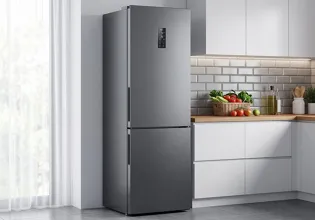
- Refrigerators that stop cooling evenly — often the condenser coils are caked with dust behind a unit wedged into a narrow kitchen alcove with almost no airflow behind it.
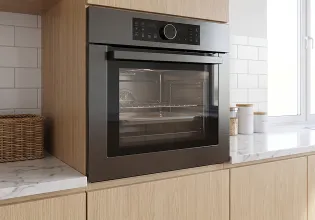
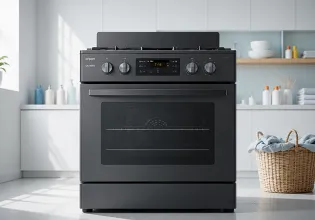
- Gas ovens and stoves that won't hold temperature or fail to ignite. Worth checking: if you smell gas, the Hingham Fire Department advises calling a licensed professional immediately rather than trying to troubleshoot it yourself.
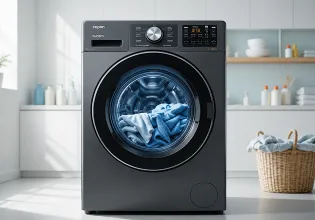
- Washers leaking from the bottom, usually traced to a cracked hose or a worn door boot — in a basement laundry, even a small leak can go unnoticed for days.
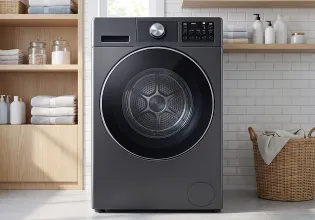
- Dryers that overheat or shut off mid-cycle. Lint buildup in a long vent run through a basement wall is a common cause.
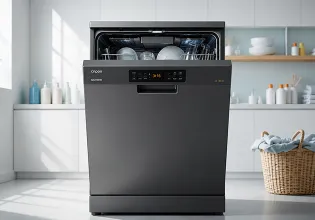
- Dishwashers that leave dishes cloudy or won't drain completely. Sometimes the issue is a kinked drain hose behind the unit; sometimes it's the water supply valve under the sink barely opening.
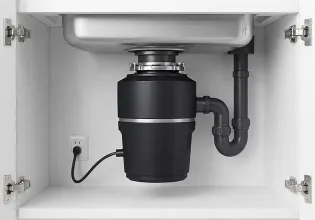
- Garbage disposals that hum but won't spin — often jammed by a small bone or piece of glass.
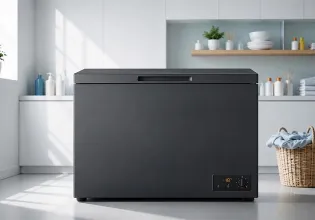
- Freezers building excess frost or warming above safe temperatures, which can mean a failed door gasket or a defrost timer that's stuck.
Local Utility, Permit, Safety, and Disposal Factors in Hingham
If a repair job crosses into installation territory — a new gas connection, rewired circuits, or modified plumbing — Hingham has specific permit requirements you should know about before any work starts. The town's Building Department at 210 Central Street requires separate gas permits for any work involving gas-line connections, including hooking up a gas range or gas dryer. Electrical permits are required when an appliance installation involves new or modified wiring, and plumbing permits apply to dishwasher or garbage disposal installations that touch water supply or drain connections. All of this work must be handled by licensed contractors who pull the appropriate permits before they begin. If someone offers to skip the permit, pause — that's a red flag. You can verify current Hingham Building Department permit requirements directly.
The state backs this up. Under the Massachusetts plumbing and gas fitting code 248 CMR, all gas fitting and plumbing work must be performed by a licensed plumber or gas fitter. The Massachusetts electrical code 527 CMR requires the same for electrical work — a licensed electrician with a permit. Ask your technician to confirm they've pulled the permit before work starts.
Safety is the other side of this. Hingham homes with gas stoves, ovens, or dryers are required to have working carbon monoxide detectors under the Massachusetts fire safety code 527 CMR 1.00, and the Hingham Fire Department enforces these requirements locally. When a fuel-burning appliance is replaced or newly installed, carbon monoxide detector compliance needs to be verified. That step is easy to overlook in the rush to get a new stove working.
Dryer venting deserves its own mention. Lint accumulation is a leading cause of residential fires, and the Hingham Fire Department supports proper dryer vent maintenance. In many older Hingham homes, the dryer vent runs through a basement wall or takes a couple of turns before reaching the exterior — that extra length traps lint faster than a short, straight run would. If your dryer is taking longer than usual to finish a cycle, check the vent before assuming the heating element is bad.
Water-connected appliances — dishwashers, washing machines, refrigerators with ice makers — all run on Hingham's own municipal water and sewer system. Local water pressure and supply conditions can affect how these appliances fill and drain. If a dishwasher isn't filling properly or a washer takes too long on the rinse cycle, the issue might not be the appliance itself — it could be a partially closed shutoff valve or pressure that fluctuates during peak hours. Garbage disposal use may also be subject to Hingham sewer system guidelines, so it's worth being mindful of what goes down the drain.
Massachusetts also protects you as a consumer. Under Massachusetts consumer protection law Chapter 93A, businesses — including appliance repair providers — are prohibited from unfair or deceptive practices. If you encounter misleading pricing or misrepresented work, you can file a complaint with the Attorney General's office. The law allows double or triple damages for willful violations, so reputable companies take it seriously.
Hingham Building Department
210 Central Street
Hingham, MA 02043
Phone: (781) 741-1455
Official Website
What Makes Appliance Repair in Hingham Different
Hingham is a South Shore town where the housing stock ranges from antique colonials near the harbor to newer construction out toward Route 3. That mix matters for appliance work. An older home in Hingham Center might have a kitchen with a gas range connected to original piping that predates modern fittings, meaning even a straightforward stove swap could require a gas permit and a licensed gas fitter. A newer home in South Hingham might have a dedicated 240-volt circuit for an electric dryer, but the panel is in a finished basement behind a storage wall. Not every house is set up the same way.
The town's disposal rules also set it apart from neighboring communities. You can't simply wheel a dead refrigerator to the curb and expect it to disappear on trash day. Hingham residents must schedule bulky item and large appliance pickups through the DPW, and appliances containing refrigerants — like refrigerators and freezers — are subject to special handling requirements. The town operates a transfer station for certain materials, but the scheduling step is mandatory. That alone can change the math on whether to repair or replace: if getting rid of the old unit takes coordination and planning, fixing the one you have starts to look more practical.
Appliance Replacement and Household Equipment Considerations in Hingham
When a repair no longer makes sense — the compressor is shot on a fifteen-year-old fridge, or the drum bearings on your washer cost more than half a new machine — the next steps in Hingham involve more than just ordering a replacement online.
First, figure out what happens to the old unit. According to the Hingham DPW solid waste and recycling guidelines, you need to schedule large appliance pickups rather than placing items curbside without arrangement. Refrigerators and freezers require special handling because of their refrigerants. The town's transfer station accepts certain bulky materials, but call the DPW at (781) 741-1450 first to confirm what's accepted and how to arrange it.
Second, think about permits. Swapping a gas range for another gas range on the same connection is usually straightforward, but if you're switching from electric to gas — or adding a new dishwasher where there wasn't one before — the Building Department will likely need to issue a gas, electrical, or plumbing permit depending on the scope. The installer has to pull that permit before starting, not after. Ask them to confirm.
Third, check your carbon monoxide detectors. Under Massachusetts fire code, CO detector compliance must be verified when fuel-burning appliances are replaced or newly installed. If you're putting in a new gas dryer and your only CO detector is upstairs, that may not meet the requirement. It's a quick check that can prevent a serious problem.
Finally, if a new dishwasher or washing machine is going in, keep in mind that these connect to Hingham's municipal water and sewer system. Old shutoff valves under the kitchen sink or behind the washer can seize up after years of sitting in one position. It's worth turning them before installation day so you know whether they actually close — finding out a valve doesn't shut off when there's water spraying across the laundry room floor is not the time to learn.
Hingham Department of Public Works
346 Lincoln Street
Hingham, MA 02043
Phone: (781) 741-1450
Official Website
Areas We Serve Throughout Hingham
We handle appliance repair calls across every village and neighborhood in Hingham. Here's a look at the areas we cover and what we typically encounter:
- Hingham Center — Many of the homes here date back well over a century, with kitchens that have been remodeled around original layouts. Gas ranges often sit in tight spots between cabinetry that wasn't designed for modern appliance widths, making access for repair tricky.
- South Hingham — Tends toward newer single-family homes with dedicated laundry rooms on the main floor. Dryer vent runs are usually shorter and more direct, but we still see lint buildup where the vent elbows through the wall.
- North Hingham — A mix of older and mid-century homes where basement laundry setups are common. Washers down here sometimes develop slow leaks that go unnoticed on concrete floors until mineral deposits start forming around the base.
- East Hingham — Closer to the harbor, homes here deal with coastal humidity that can accelerate rust on exposed appliance components. Freezer door gaskets tend to wear faster in damp conditions — worth checking if the seal feels loose.
- West Hingham — Larger lots and more spread-out properties often mean longer dryer vent runs routed through basement or crawlspace walls. If your dryer is taking extra time, the vent length is usually the first thing to investigate.
- Crow Point — A densely settled waterfront area with older cottages and year-round homes. Kitchens tend to be compact, and getting a full-size refrigerator through a narrow doorway sometimes requires removing the doors from both the fridge and the frame.
- World's End — The residential properties near this area often sit on larger parcels with older plumbing infrastructure. Ice maker lines on refrigerators can develop pinhole leaks where copper tubing has corroded over decades, so if you notice dampness behind the fridge, check the supply line before assuming the appliance itself is the problem.